AI content
Two briefs, one jar of sambal: what Meta's video tool needs
By DongHyun Kim, Co-founder, CTO and COO · Last updated

The first brief says: "A 30-second video for our sambal."
The second says: "For parents who cook after work. Open on the lid coming off over hot rice. Show a spoonful going on, and the jar in a hand. End on: order on WhatsApp by Thursday for Saturday delivery."
On 16 November, Meta introduced its new video tool to small businesses in Singapore. Type either brief in and you get a video back in minutes. Only the second tells it what your customer should see first and what to do at the end.
What should we tell Meta's video tool before it makes our video?
Tell it six things it cannot know: who is watching, what they see in the first three seconds, the one reason to buy from you, what the video shows as proof, what to do next, and where the video will run. Marketers call those lines a brief. Then read the plan the tool writes, and change it there, before the final video is made. And if the video goes on Shopee, switch on Shopee's own AI label when you post.
What Dream Render does
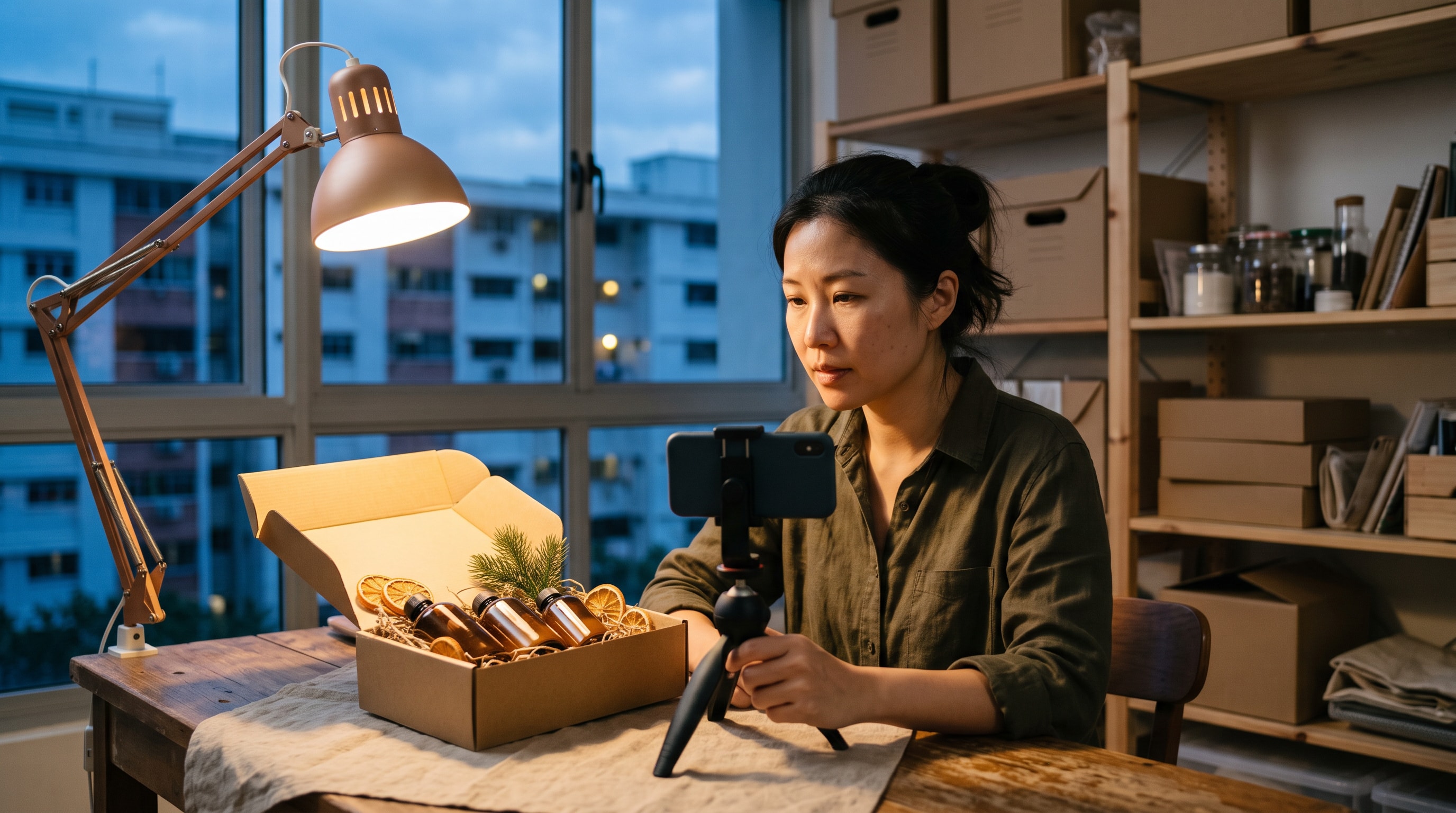
The tool is called Dream Render, and it works in a web browser. You sign in with the Facebook or Instagram account you already use for the business, describe the video you want or pick a ready-made format such as a product reveal, and, if you like, add photos of your product.
Its own guide says it then writes a plan, shot by shot, explains the choices it made, shows you a preview of the look and sound, and makes the final video when you approve. You choose 15, 30, 45 or 60 seconds, and a tall, square or wide shape. Meta says the videos are published with a label showing they were made with AI. Meta gives eligible accounts credits to try it, and the questions at the end cover what it costs after that.
It works like a good caterer. It can cook almost anything, but it can't guess who is coming.
Six lines to write before you press make
Write them on paper first, then type them into the tool in one go.
- Who is watching. One kind of person, in one line. "Parents in the east who cook after work" gives the tool a kitchen and an evening. "Everyone who likes spicy food" gives it nothing to work with.
- What they see in the first three seconds. Describe the moment: the lid coming off over hot rice, or cream going onto a dry hand. TikTok's own advice to advertisers is to show what you offer in the first three seconds and to catch people's attention within six. If the first shot is a sunset over a kitchen window, those seconds are gone before your jar appears.
- The one reason to buy from you, in your customers' words. Open your WhatsApp and Instagram messages and find what customers say back to you, such as "not too sweet" or "my kids finished it in two days". Choose one. In a 15-second video, five reasons get about three seconds each.
- What the video shows as proof. Something a viewer can see rather than be told: the jar's real size in a hand, or the texture on a spoon. If a claim can't be shown or backed up, leave it out of the voice as well.
- What to do next, with its day. "Order on WhatsApp by Thursday for Saturday delivery" tells people what to do. "Follow us for more" doesn't. TikTok's same page says to end by telling people what to do.
- Where it will run. This sets the length and the shape. For Reels and TikTok, choose tall, and start with 15 seconds, the shortest the tool offers. Choose square for a post in the Facebook or Instagram feed, and wide for your website.
For the sambal, the six lines read: parents in the east who cook after work. The lid comes off over hot rice. Customers say "my kids finished it in two days". A spoonful going on, and the jar in a hand. Order on WhatsApp by Thursday for Saturday delivery. Tall, 15 seconds, for Reels.
Then add your clearest real photos of the product, taken in daylight. The tool builds every shot from what you give it.

Read the plan before you approve it
Choose a way of making the video that stops for your approval. The tool's "Quick creation" option can make the video without stopping, so skip it for this.
Make your changes in the plan, before the final video exists. There, a change is a line of text. The tool's guide asks you to send all your changes at once, and it applies them together.
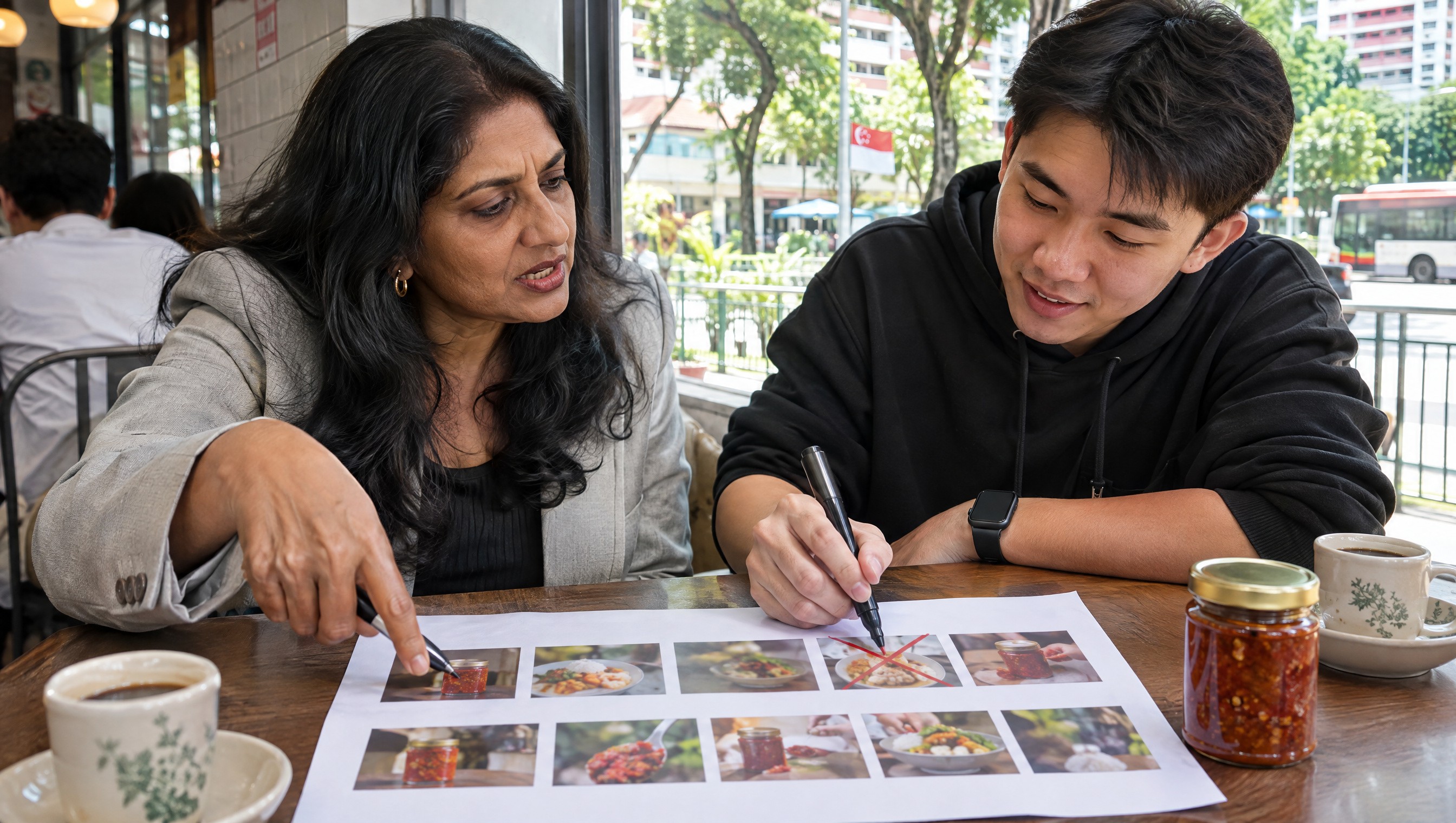
Read the plan against your six lines:
- The first shot. Is it your three-second moment, or an opening the tool chose?
- The words. Read the voice and the words on screen out loud. Strike any claim you could not show a customer the proof of, such as "best in Singapore", "healthiest", or a result you have never measured.
- The people. If a person appears, they should only hold or use the product. Strike any line where they say "I bought this" or "I use it every day".
- The last shot. Does it end on what to do next, with its day?
The guide also says the final video will differ from the preview. So watch the final video before you post it, with the real product in your hand, and check the size, the colour and the label against it.
Posting it on Shopee? Switch on Shopee's own label first
Whatever label Meta adds, Shopee asks for its own. Since 6 November, Shopee's rules for AI-made video say that before you post a video with AI-made content in it on Shopee Video, you must switch on the "AI-generated" label (Shopee calls the switch "AI-generated Inform").
One video posted without it is taken down, and it costs 12 penalty points. That alone takes your videos off Shopee's recommendation and discovery pages until the points reset, at the start of each quarter. At 15 points, you are banned from posting on Shopee Video for good, so a second slip before 1 January would cross that line.
The same rules ask for two more things. A before-and-after must show a result a customer can really expect from normal use. And no made-up hardship or emergency story may be used to sell. If you choose the tool's before-and-after format for a cream, the "after" has to be one your customers will actually see.
TikTok, YouTube, Facebook and Instagram have their own label rules, and our article on AI presenters sets them out.
When the tool is enough, and when to bring in people
For a shop that needs a steady flow of short product clips, a tool like this with a good brief covers a lot: this week's flavour, a festive version, or two different first shots to see which one people watch.
Film real people when the video is you telling your story, or a real customer giving their review. A film you will run for a year is a bigger job too, and our guide to what a video ad costs in Singapore shows what it takes. The tool also can't tell you which reason to buy works best. Your customers' messages can, which is why line 3 starts there. The lines AI should never cross in your marketing are in our practical guide to AI marketing for small businesses.
If you want an easy place to start, your best seller is the one to try first: its six lines are usually the easiest to write. One tall, 15-second video, made with an option that stops for your approval, is enough to see what the tool does with them. And if it goes on Shopee, the AI label is the one switch not to forget.
Questions owners ask
What does Dream Render cost?
Eligible accounts get credits from Meta to try it, and the weekly ones run out at the end of their week. After that you buy credits in packs, with no subscription. The plan, the preview, the video and every change can use credits, and its pages show no price per video, so check what a video uses in the tool before you make a batch.
Can we run the videos as ads?
Yes. Meta says you download the finished video and publish it yourself, as a post or as an ad.
Can it make a video in Mandarin or Malay?
Its guide says each video is made in the language you write the brief in, but it doesn't list which languages work. Make one short test first, and have someone who speaks the language listen to the voice before it goes out.
Can AI WISE make our product videos?
Yes. AI WISE is a Singapore-based digital marketing agency serving Asia, and AI content production is part of our work. Every video starts from your real, unedited product photos. You review the script and the pictures first, nothing is delivered until you approve it, and every project is quoted before work starts. See how our AI content production works.