Digital ads
Should our Shopee shop pay creators or run ads?
By DongHyun Kim, Co-founder, CTO and COO · Last updated

Creators or ads: where should your Shopee shop's December money go?
Both can bring in orders, and they are paid for in opposite ways. The creator is paid only when someone buys through the link. An ad is paid for whether anyone buys or not.
Creators already carry a real share of Shopee's traffic. One in ten visits to Shopee in Singapore now starts with a creator's post. That is what Shopee said after its event for creators on 6 November. More than 300,000 people here now share Shopee links in their videos, posts and live streams. The sales they bring in grew by close to 50% in a year.
Should our shop pay creators per sale, or pay for ads?
Both, in that order. Pay creators a share of each sale first: it costs nothing until someone buys, and it shows you which videos, and which words, make people buy your product. Then put ad money behind the few posts that already sell, with the creator's permission, so far more of the right people see them. An ad built on an untested video is a guess. An ad built on a post that already sells is not.
Two ways to pay for a sale, side by side
Think of a shop assistant paid only on commission, and a poster you rent at an MRT station. The assistant costs you nothing on a slow day, but she can only talk to the people who walk past. The poster is seen by thousands, and you pay the rent whether anyone stops or not.
A Shopee affiliate is a creator who shares links to Shopee products in their posts and earns a share of each sale made through those links.
Creators, paid per sale. Shopee's affiliates earn Shopee's own commission, and a shop can add a share of its own for its products, up to 40%). The shop pays its share only when someone buys through the link. It suits products people decide on by seeing them used: skincare, food, home and kitchen things, gadgets. What you give up is control. You can't choose how many people see the post, or when.
Ads, paid whether anyone buys. You pay Meta or TikTok to show a video to the people you choose, as many as your budget reaches, on the days you choose. It suits a launch date, a sale, or a video you already know sells. What it can't do is tell a good video from a weak one before you pay: an untested video spends the same money as a great one.
That is why the order matters. Creators find the posts that sell. Ads make those posts reach more people.
The sum to do before you choose a share
Before you set a share for creators or an ad budget, work out what you keep from one sale.
Take a product you sell for S$40 (a made-up example). After the product itself, Shopee's fees and packing, say you keep S$16. That S$16 is the most one sale can cost you, from any channel, before the first order loses money.
A 15% share to a creator costs S$6 of each sale, so you keep S$10. An ad that brings in a sale for S$12 leaves you S$4. Both can be worth it. A customer who comes back to buy again is worth more than the first order, so count that only if your own orders show people do come back. The point is to know your S$16 before you start, so you can tell a channel that earns from one that only looks busy.
How to choose creators, and what to give them
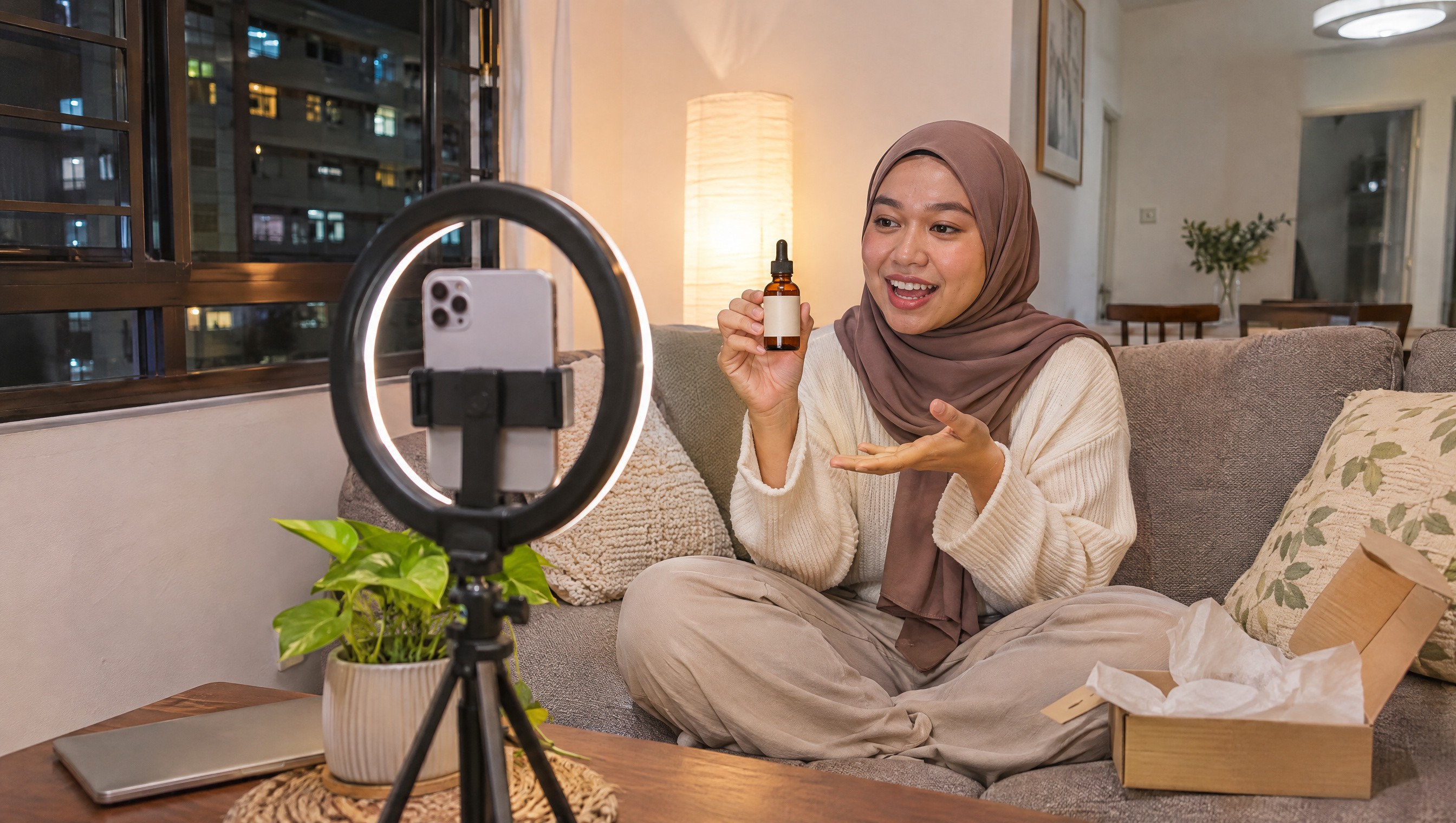
Choose creators by what their followers buy, not by how many followers they have. Read the comments under their posts. If people ask where to buy, what it costs and whether it suits them, those followers shop. One of the creators Shopee honoured this month started by sharing links with friends and family, the way she already recommended things to them.
Ask each creator for the numbers Shopee shows them: how many orders their links brought. Shopee lets every creator track their orders and earnings), so a creator who sells will be glad to share them.
Then give them what they need to get it right: the product to try, and one page of facts. What it does, who it is for, what makes it different, and what it must never claim. Shopee itself brought brand teams and creators together on 6 November so creators could ask questions first-hand. Let them say it in their own words. People trust a creator because she sounds like herself.
One rule holds in Singapore. A creator who earns a share of your sales must say so in the post. Singapore's advertising watchdog says that when a creator has a commercial relationship with the brand, "such a relationship should be indicated in the content". A labelled post with a share of the sale is an honest ad. A review is different: it is a customer's own word, and you never pay for one.
Turning the post that sells into an ad

Once a creator's post brings in orders, you can run that same post as your ad, with their permission.
On TikTok it is called a Spark Ad. The creator gives you a code, you choose how long it lasts, and the likes and comments the ad earns stay on the creator's own post. On Instagram and Facebook it is a partnership ad: the post runs with the creator's name on it. Shopee and Meta are also trying out a way for shops to run creators' Shopee posts as Instagram ads, with the creator's consent, in some South East Asian markets. Not every shop has it yet.
Ask for this permission when you agree on the share, and agree how long it lasts. A creator who knows from the start that her best post may run as an ad is far more likely to say yes.
Then judge the ad with the same sum. The share you pay plus the ad money for each sale must stay below what you keep. If it climbs above it, stop that ad and try the next post that sells.
When one of the two is enough
If you keep very little from each sale, start with neither: look at the price, the bundle or the shipping first, because no channel can earn on a sale that barely pays. If a creator's posts already bring more orders than you can pack, you don't need ads yet. And if your product is something people search for only when they need it, such as a spare part, search ads usually come before creators.
What to do this week
- Work out what you keep from one sale of your best seller. That is your ceiling for any channel.
- Set a share for creators on that product that still leaves you money.
- Write one page of facts for creators, with the label rule at the bottom.
- Send it, with the product, to five creators whose followers ask where to buy things like yours.
- In two weeks, see which posts sold. Ask that creator for permission to run the post as an ad, and start with a small budget.
Do creators need many followers to sell?
No. What matters is whether their followers buy things like yours. A creator with a small, trusting audience can sell more than one with a large audience that only watches. Their comments and their order numbers will tell you.
Is a creator's paid post the same as a paid review?
No. A creator's post that earns a share of the sale is an ad, and it must say so. A review is a customer's own word on your shop page, and you never pay for one, in money, discounts or gifts.
Can AI WISE run creators' posts as ads for us?
Yes. AI WISE is a Singapore-based digital marketing agency serving Asia. We run Facebook, Instagram and TikTok ads judged by what each new customer costs you, including creators' posts run with their permission, and we make the ad videos that are tested beside them. See how we run TikTok ads and Meta ads.